The Organic Resource Recovery Hub
From organic waste to feed and fertiliser.
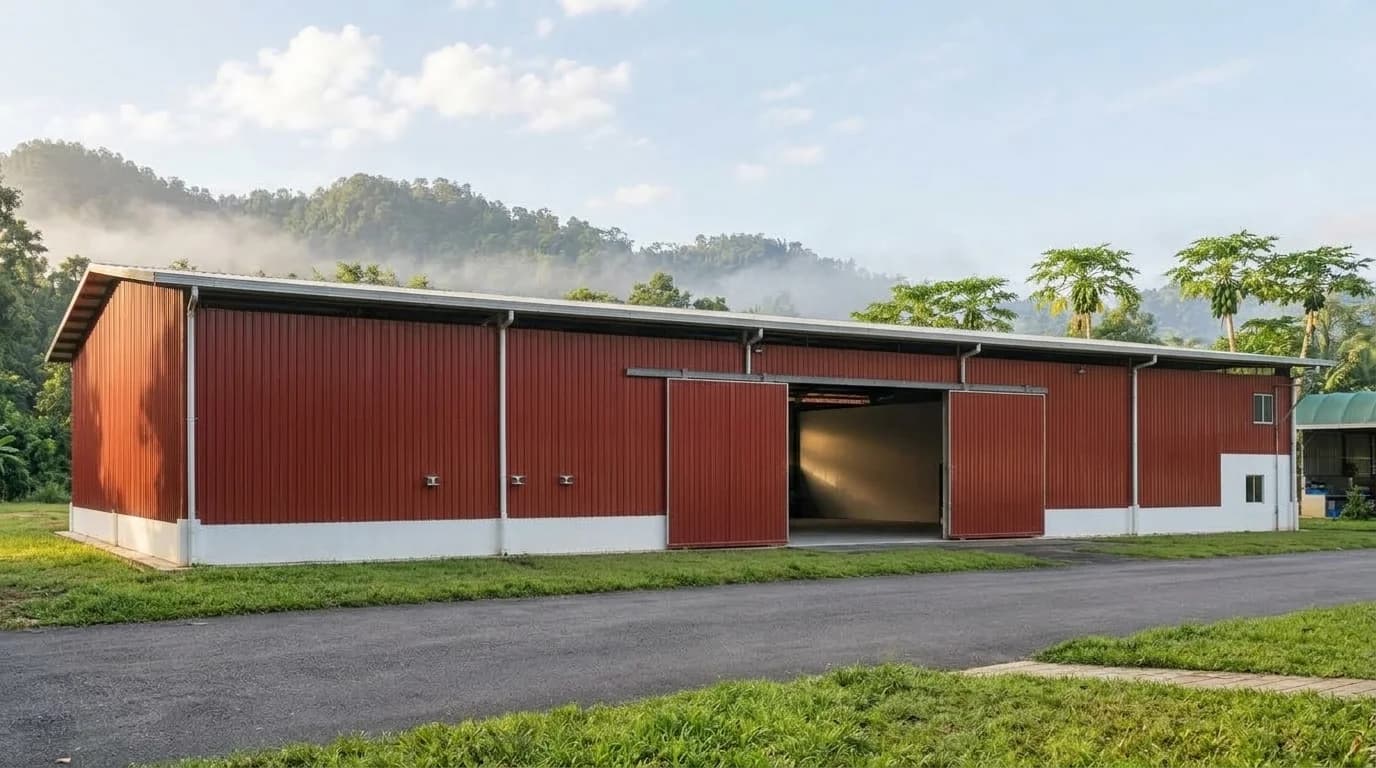
A purpose-built, integrated bio-conversion facility on about half a hectare. It combines automated multi-layer vertical larvae rearing with industrial compost fermentation troughs.
Feedstock
What comes in, and how it is prepared.
Non-hazardous organic material only. Plastics, glass, metals, hazardous and medical waste are turned away at receiving.
Poultry manure
Beneficial bacteria are added on arrival to control odour, and the manure pre-ferments in a holding tank before it goes to the larvae and the composting troughs.
Landscape waste
Trimmings dry in a shed, then a log splitter and chipper turn them into a carbon bulking agent for composting.
Food waste
Workers remove packaging by hand. The food is minced and blended into a balanced feed that the larvae eat alongside the manure.
The fly lifecycle
Seven stages, from egg to protein powder.
Black Soldier Flies are not houseflies. Adults have no working mouthparts, so they do not bite or feed. Each stage of their life has its own place at the Hub.
- 1
Broodstock & love cages
Adult flies mate in love cages and lay their eggs on wooden egg-collection sticks.
- 2
Hatchery & incubation
Eggs are collected into the hatchery. Newly hatched larvae are weighed, split into breeding and harvest stock, and given a starter feed made in an industrial blender.
- 3
Parent-stock bioponds
Breeding stock is raised on extra-nutritious feed so the adult flies live longer and stay healthy for breeding purposes.
- 4
Pupation: the waiting stage
Mature larvae crawl out of their beds on their own and pupate in a separate area, then emerge as adults into the love cages.
- 5
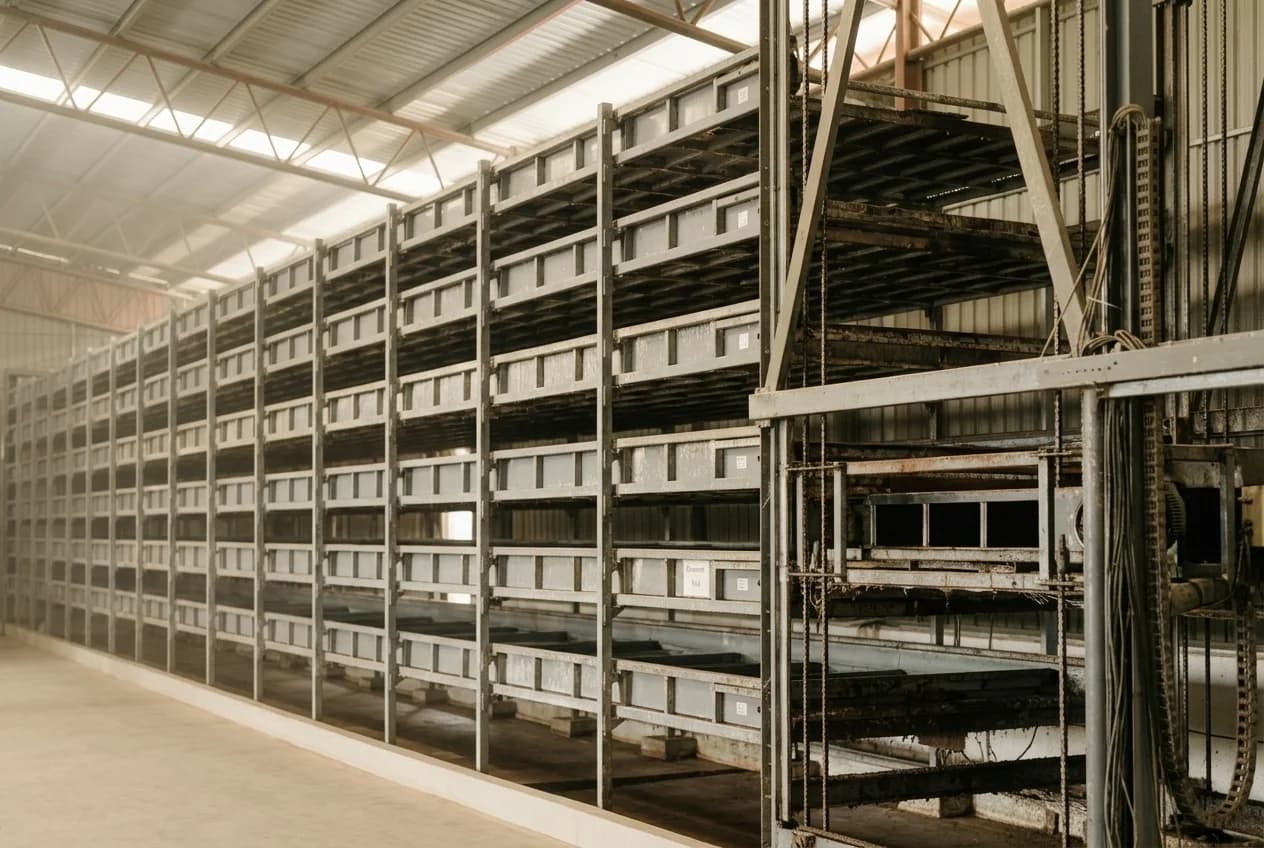
Automated vertical cultivation
Harvest stock grows on multi-layer racks that make efficient use of space and allow fast bioconversion of organic waste.
- 6
Mechanical harvesting
An automated separator splits mature larvae from their frass.
- 7
Larvae processing
An industrial microwave dryer preserves the nutrient profile, and a precision pulveriser mills the dried larvae into protein powder.
Composting line
Frass and microbes do the rest.
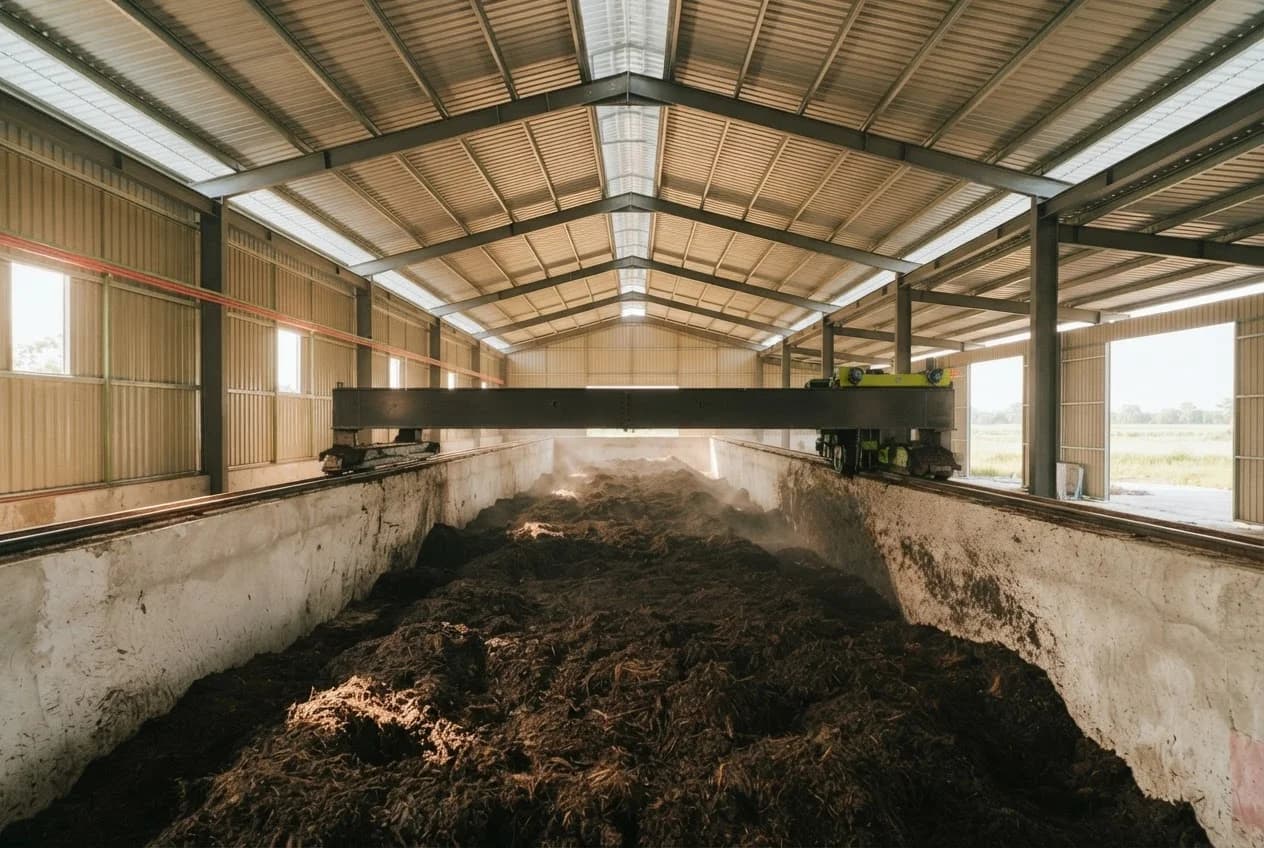
Pre-fermented poultry manure and chipped green waste are composted in aerobic troughs with BSFL frass and beneficial micro-organisms. A trommel sieve grades the result and sends oversize pieces back through the line.
- Aerobic fermentation troughs
- Automated turners
- Inlet hoppers
- Crushers
- Trommel sieves
Water & on-site ecology
Plants clean the water. Compost feeds the soil.
Biological systems manage water across the Hub, and the Hub’s own compost and frass go back into the ground.
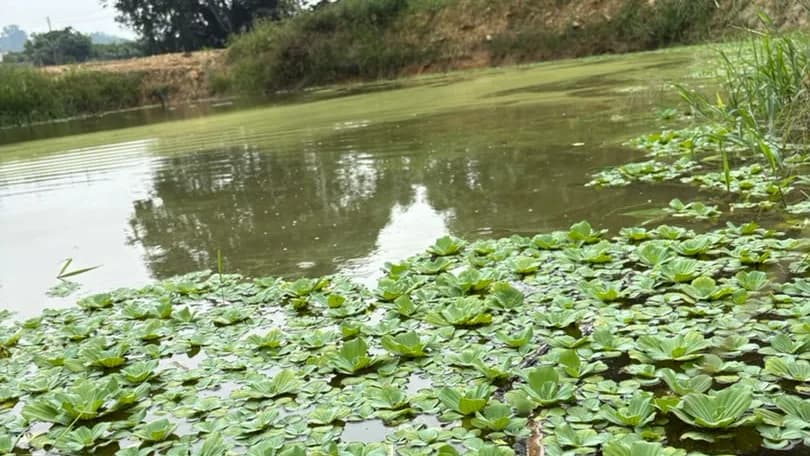
Phytoremediation ponds
Washdown water and rainwater settle in a silt trap, then pass through two ponds planted with duckweed and water hyacinth. The plants we harvest go back into composting or larvae feed.
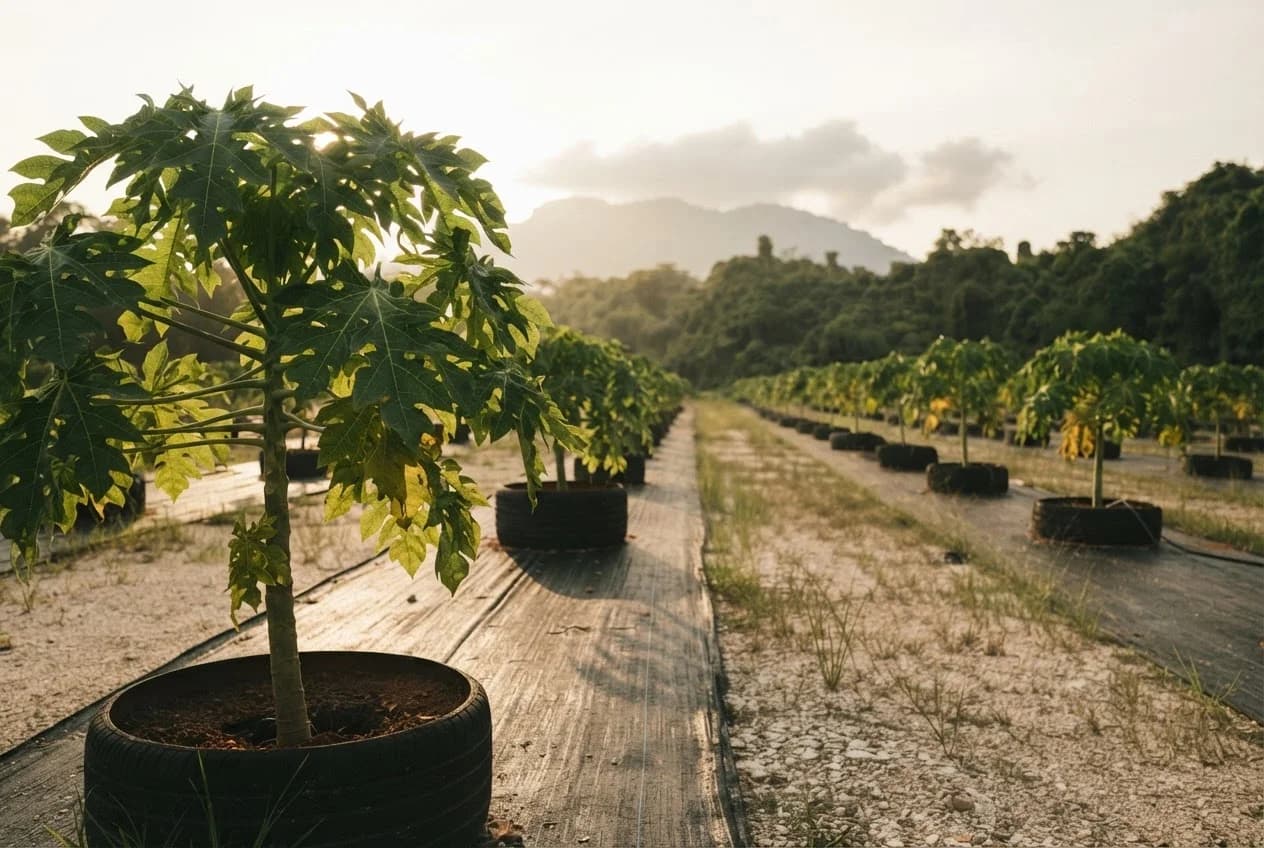
Organic papaya and vegetable plot
Our on-site plot is fed with the Hub’s own compost, frass and treated effluent. Pests are managed with natural repellents made from plant ingredients, with zero synthetic chemical pesticides.
Aquaculture research ponds
Two research ponds study water quality and the nutrition of live Black Soldier Fly larvae as feed.
Leachate treatment
Leachate, food-sorting washwater and compost overflow pass through a grease trap and an anaerobic septic tank into storage. The treated effluent irrigates the papaya and vegetable plot.
Design capacity at full operations
What goes in, what comes out.
These figures describe what the Hub is designed to handle at full operations, not current throughput.
- Poultry manure
- 30–40tonnes / day
- From adjacent poultry farming operations
- Commercial food waste
- up to 2tonnes / day
- Hand de-packaged, then minced
- Green landscape waste
- 10–15tonnes / day
- Trimmings, grass and prunings, used as a carbon bulking agent
Output
~400
tonnes / month
High-grade organic fertiliser
Plus commercial volumes of insect protein and frass