A waste problem, and an insect that eats it.
Tenong is an organic waste management company in Kuching, Sarawak. We collect organic waste from kitchens, markets and farms and convert it with black soldier fly larvae into animal feed and frass fertiliser.
Based in
93250 Kuching
Sarawak, Malaysia
The same waste becomes two products.
Tenong Resources Sdn Bhd is an organic waste management company in Kuching, Sarawak. Kitchens, markets and farms produce a wet organic fraction that has nowhere useful to go, so we take it, and black soldier fly larvae eat it.
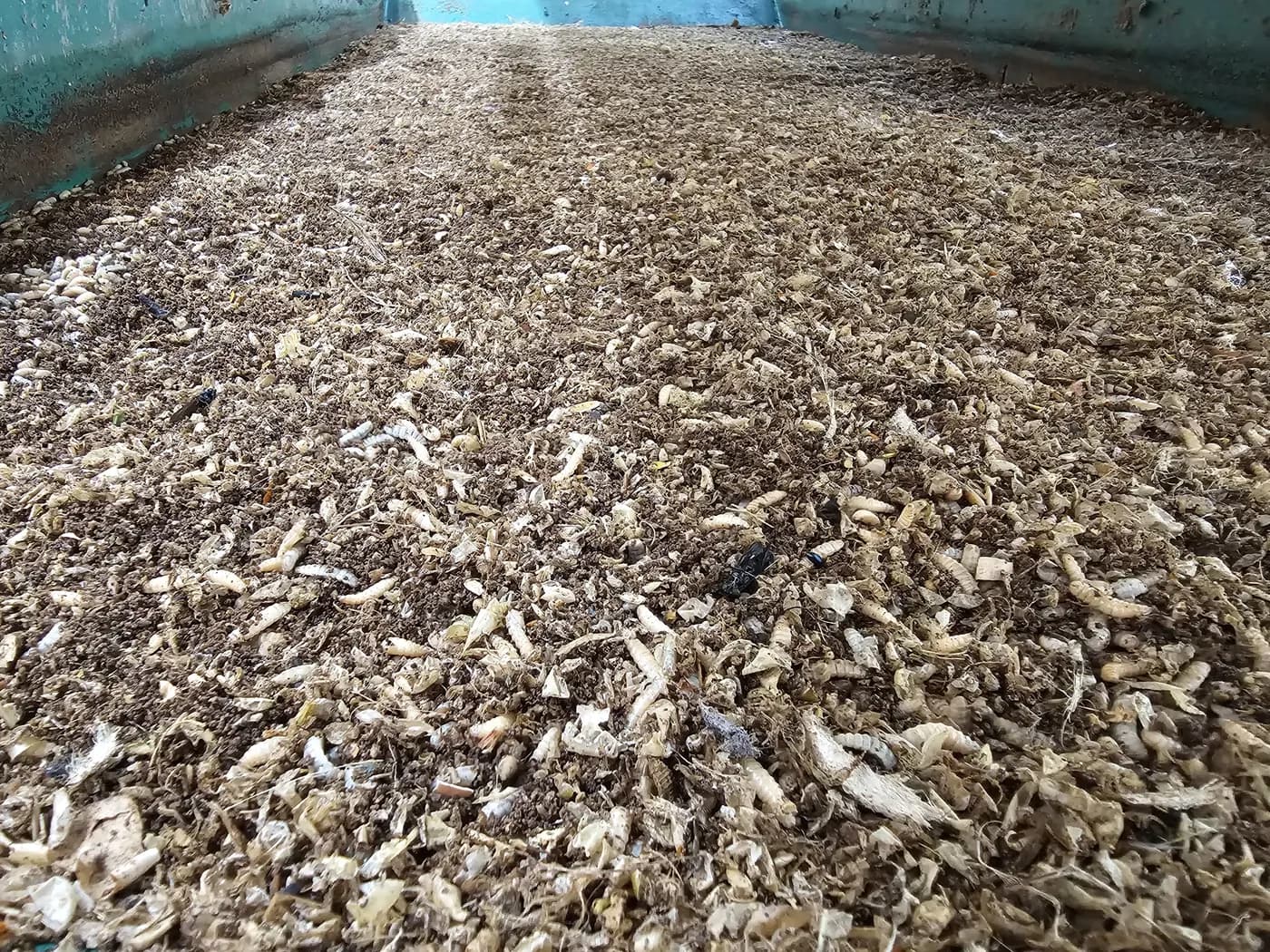
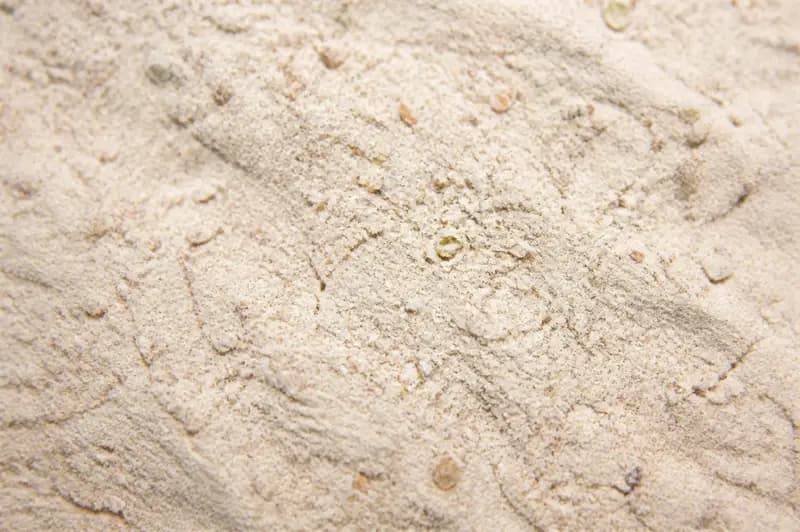
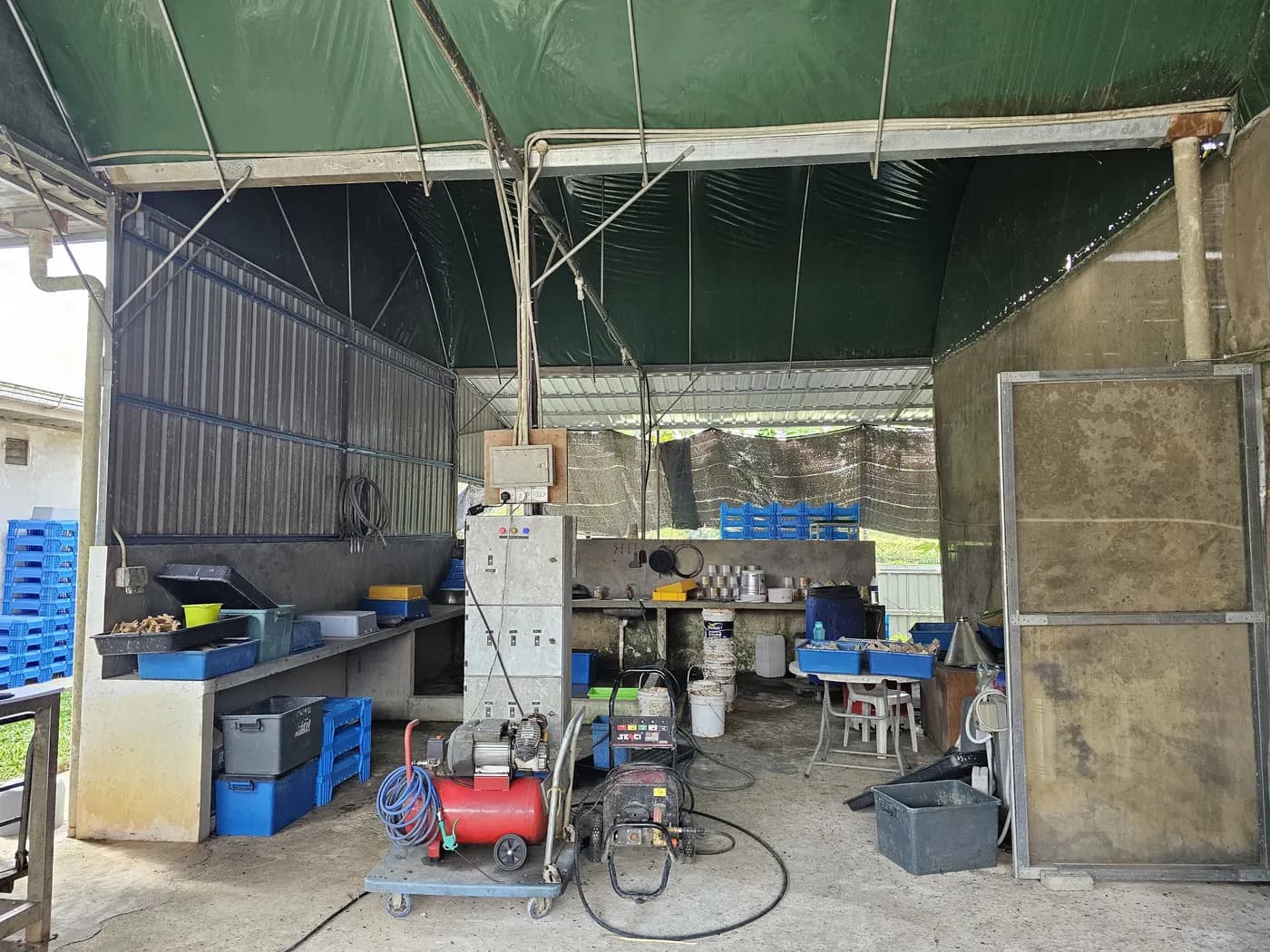
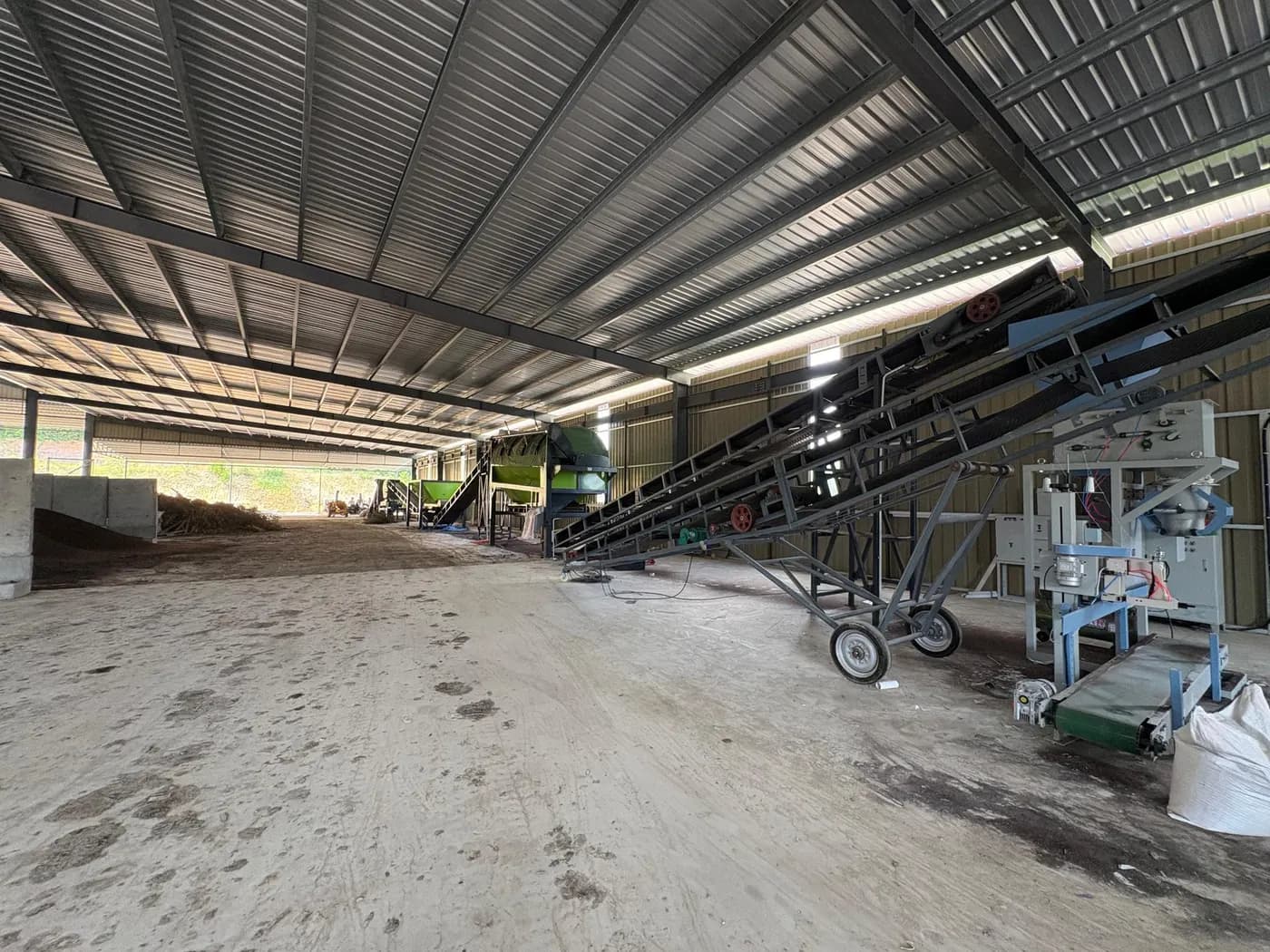
Landscape waste, chicken manure and fermented feedstock come into the building. The larvae convert it as they grow. Two things leave: protein, as dried larvae and powder, and frass, bagged as plant food. The harvesting line sieves one from the other. Both sides of that split are finished products.
Every pouch carries a single-ingredient label. No fillers, no additives, no preservatives. Each one holds exactly what it names: whole larvae, milled larvae, or frass.
Sustainably farmed. Naturally nutritious.
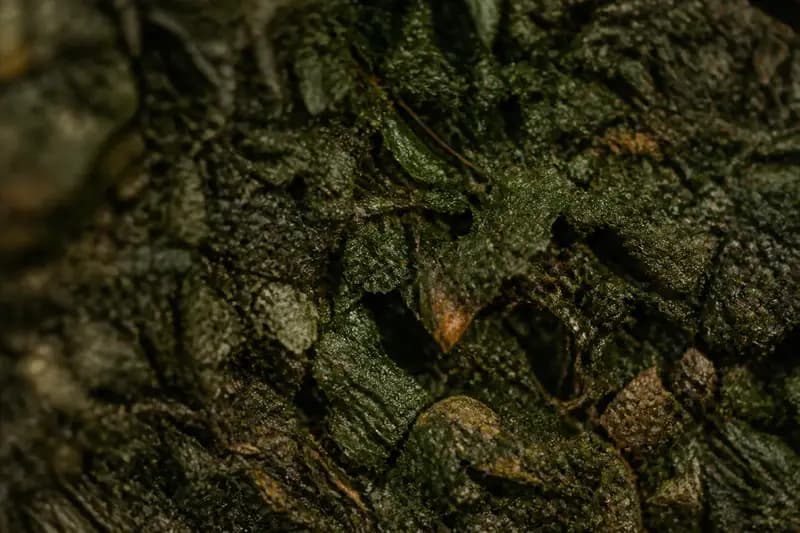
The right waste processor. Hermetia illucens.
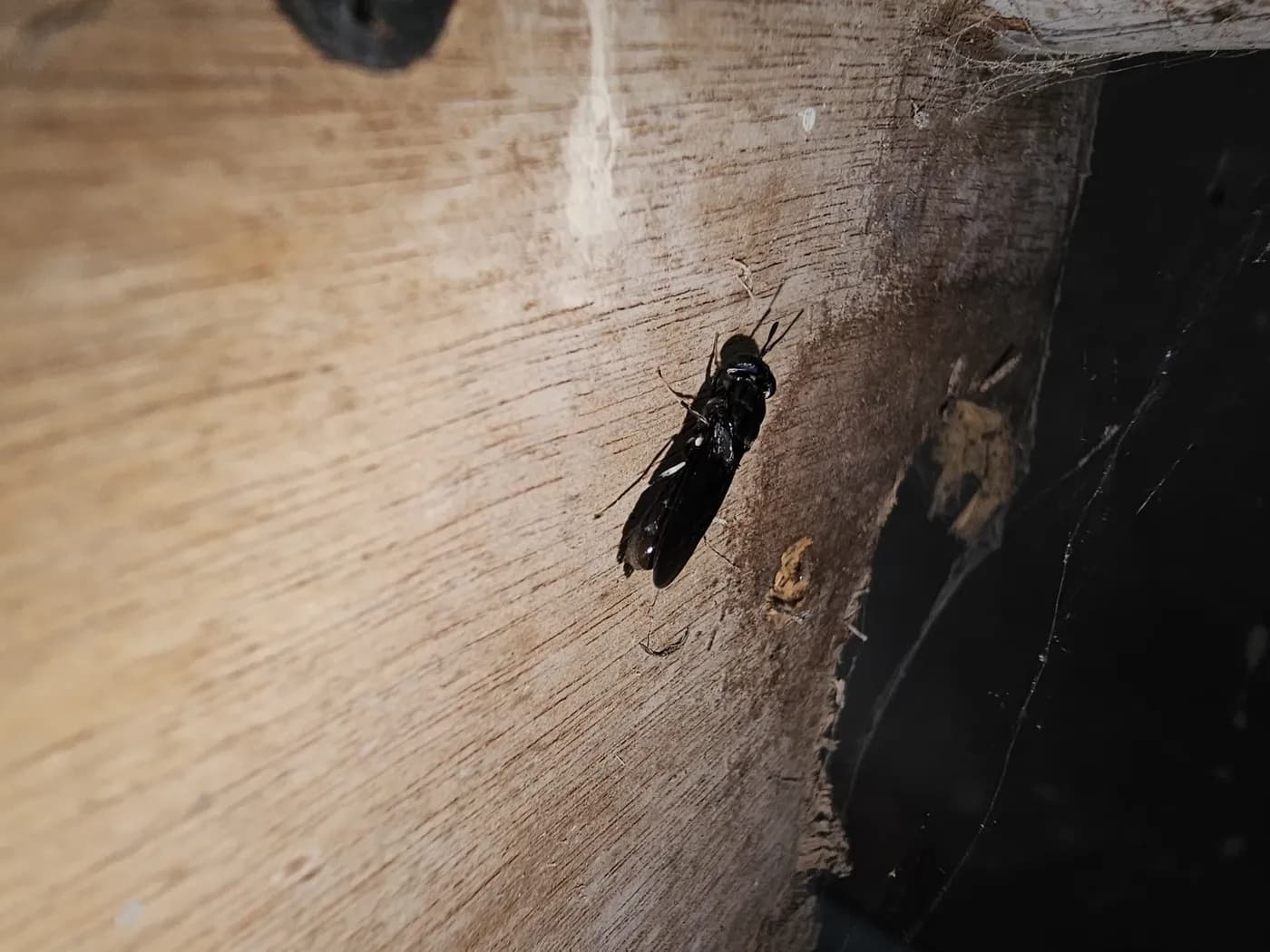
Adults have no working mouthparts, so they never bite and never feed. The larval stage is the converter.
Adults never bite
Adult black soldier flies have no working mouthparts. They never bite and never feed.
Larvae do the converting
The larval stage does the eating. Hatchlings are spread over screened organic residue and convert it as they grow.
Roughly two weeks through the substrate
Over roughly two weeks they eat their way through the substrate and grow several hundred times heavier.
Two products, both sold
The harvesting line sieves larvae from frass. Both leave the building as a product. Feed on one side, plant food on the other.
Where your waste goes.
From parent stock to the mill: organic residue comes in, and leaves as protein and frass, both of them products we sell.
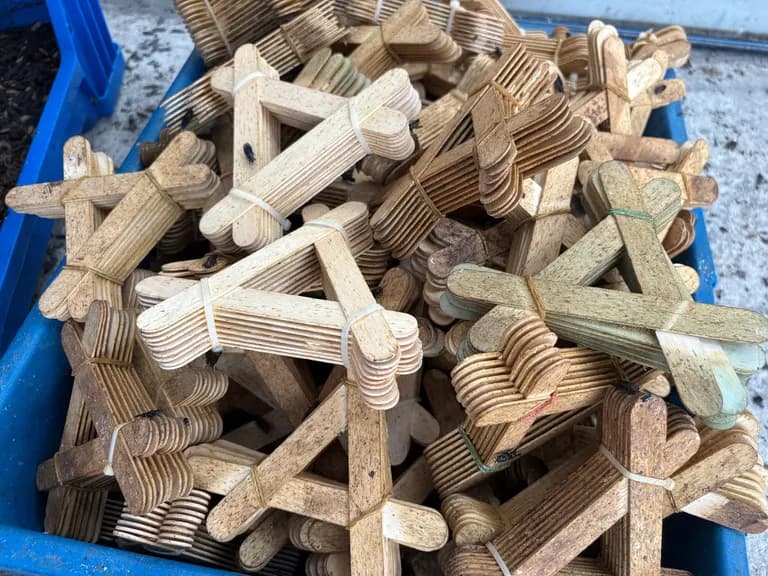
Parent stock
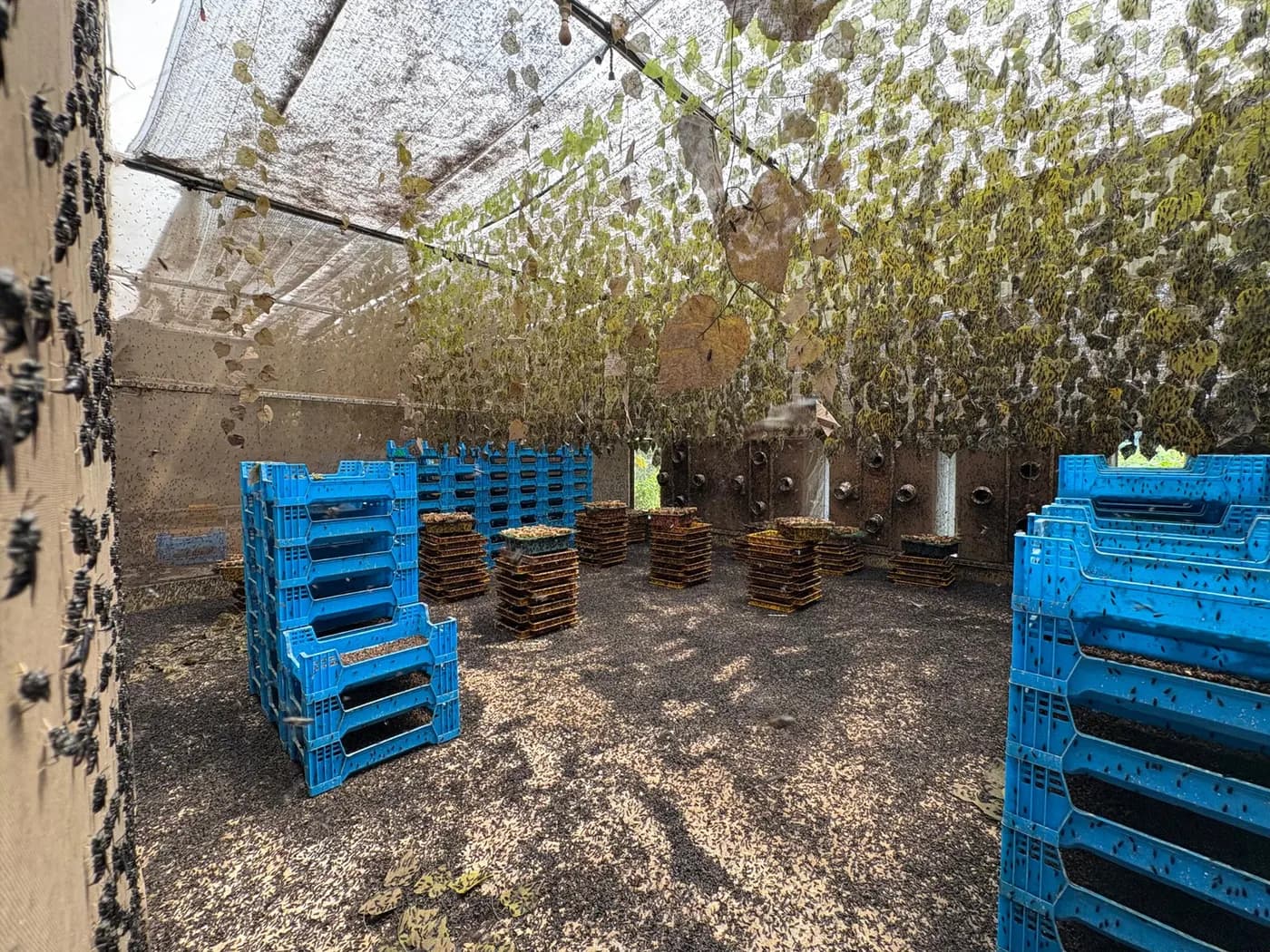
Adult black soldier flies spend their last days in the love cages. They have no working mouthparts, so they never bite or feed, and they lay into stacks of wooden egg sticks.
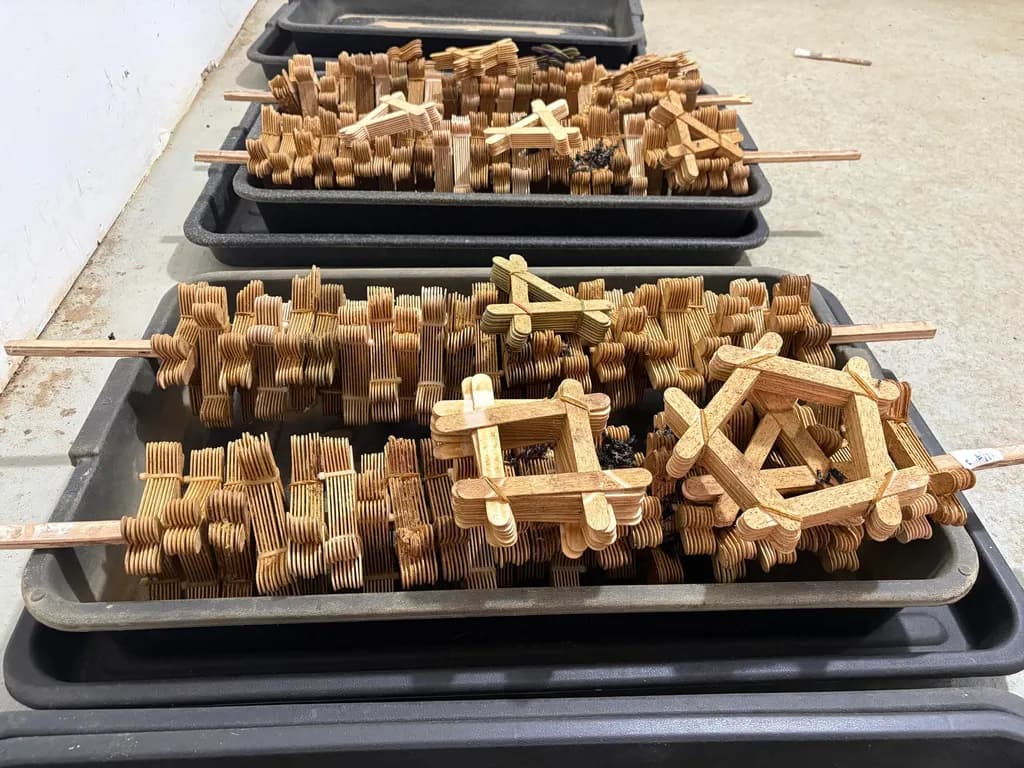
Incubation & hatchery
Egg sticks move to the hatchery, where trays are kept warm and dark until the larvae emerge, no bigger than a grain of rice.
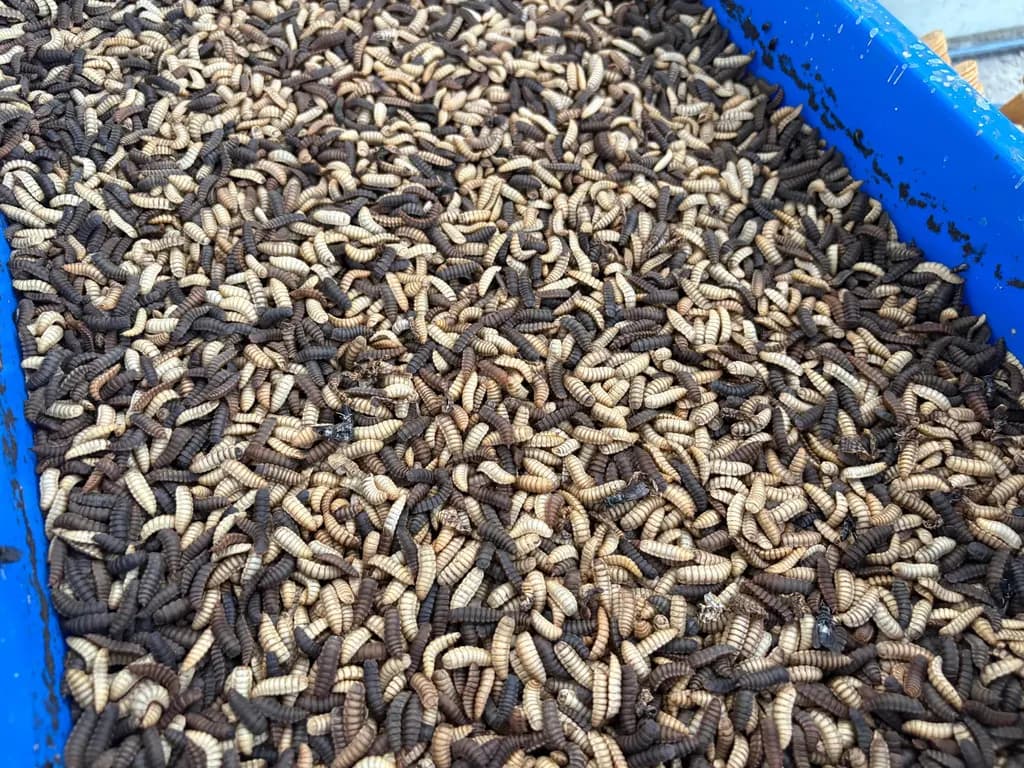
Bioponds
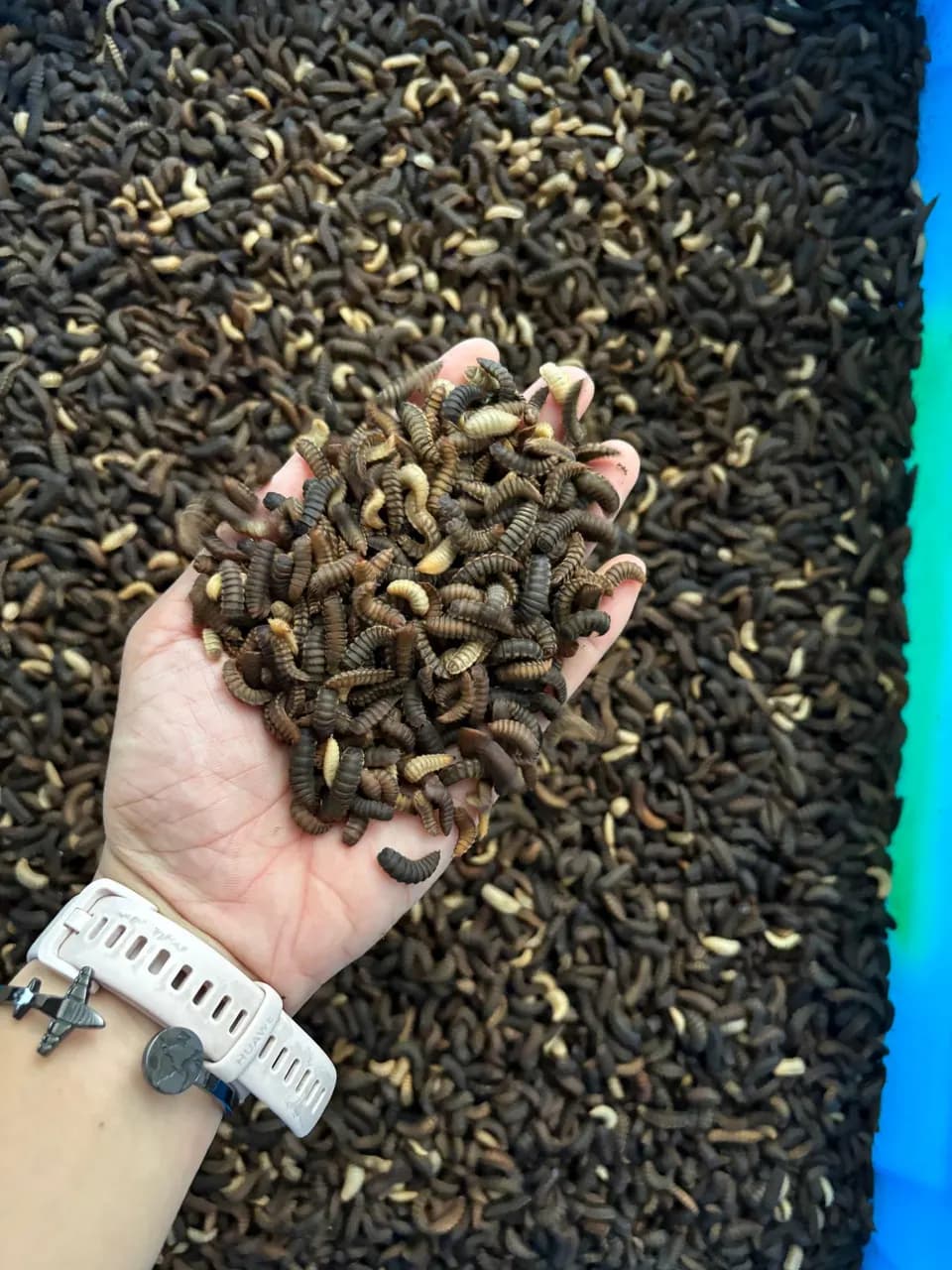
Hatchlings are spread over screened organic residue in stacked bioponds. Over roughly two weeks they eat their way through it and grow several hundred times heavier.
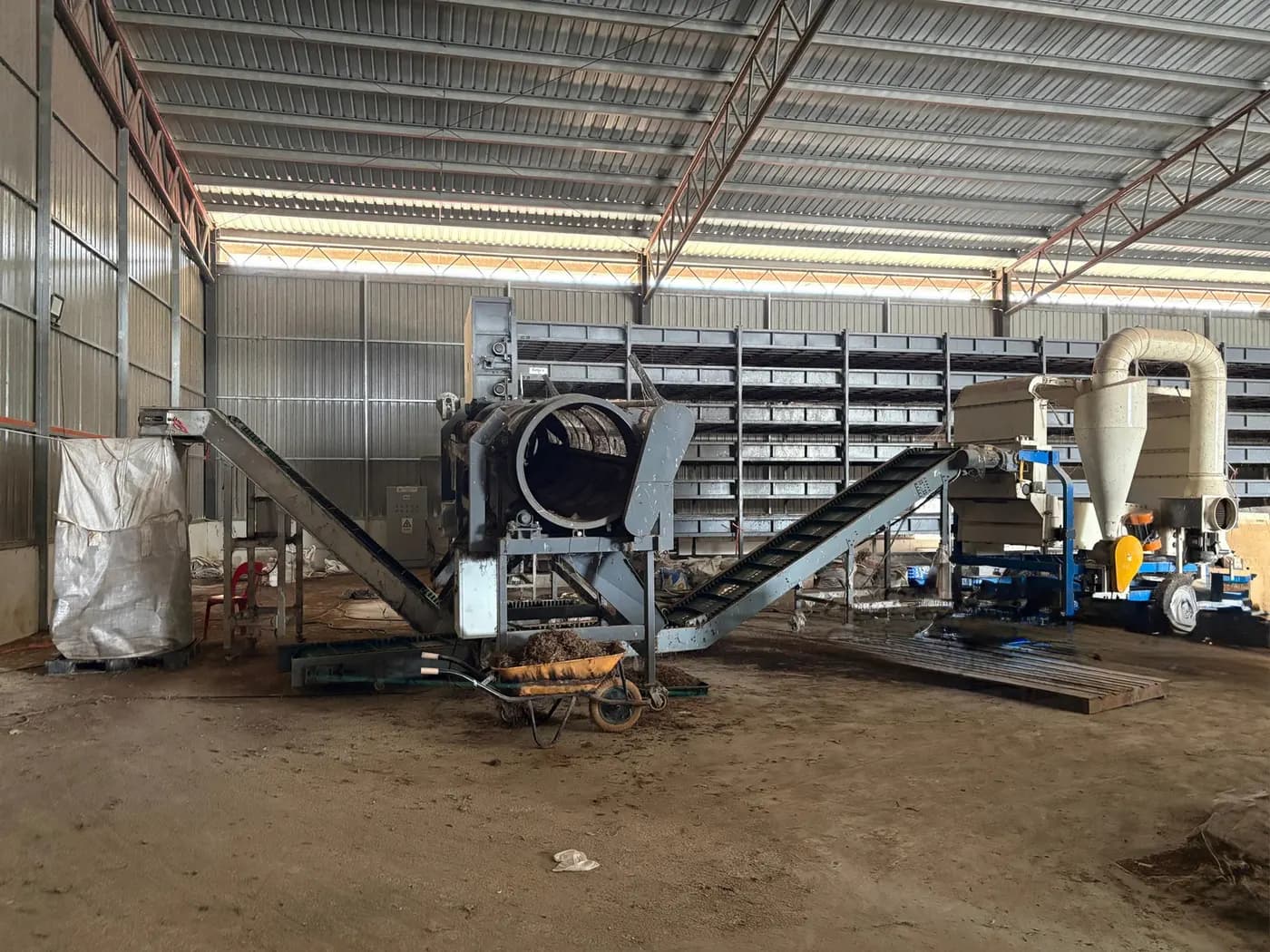
Harvest & separate
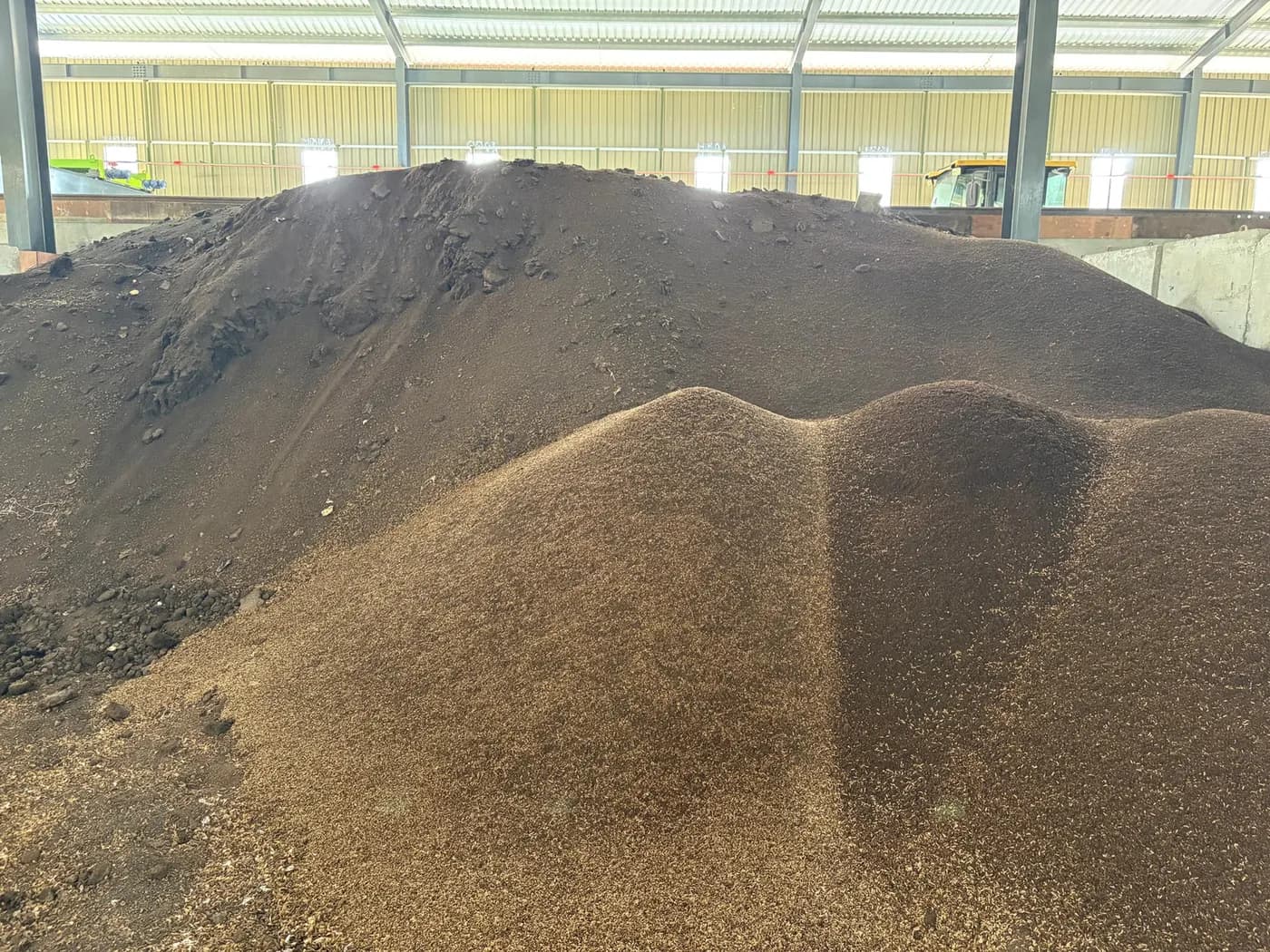
The harvesting line sieves larvae from frass. Both sides of that split leave the building as a product. The larvae go out as feed, the frass as plant food.
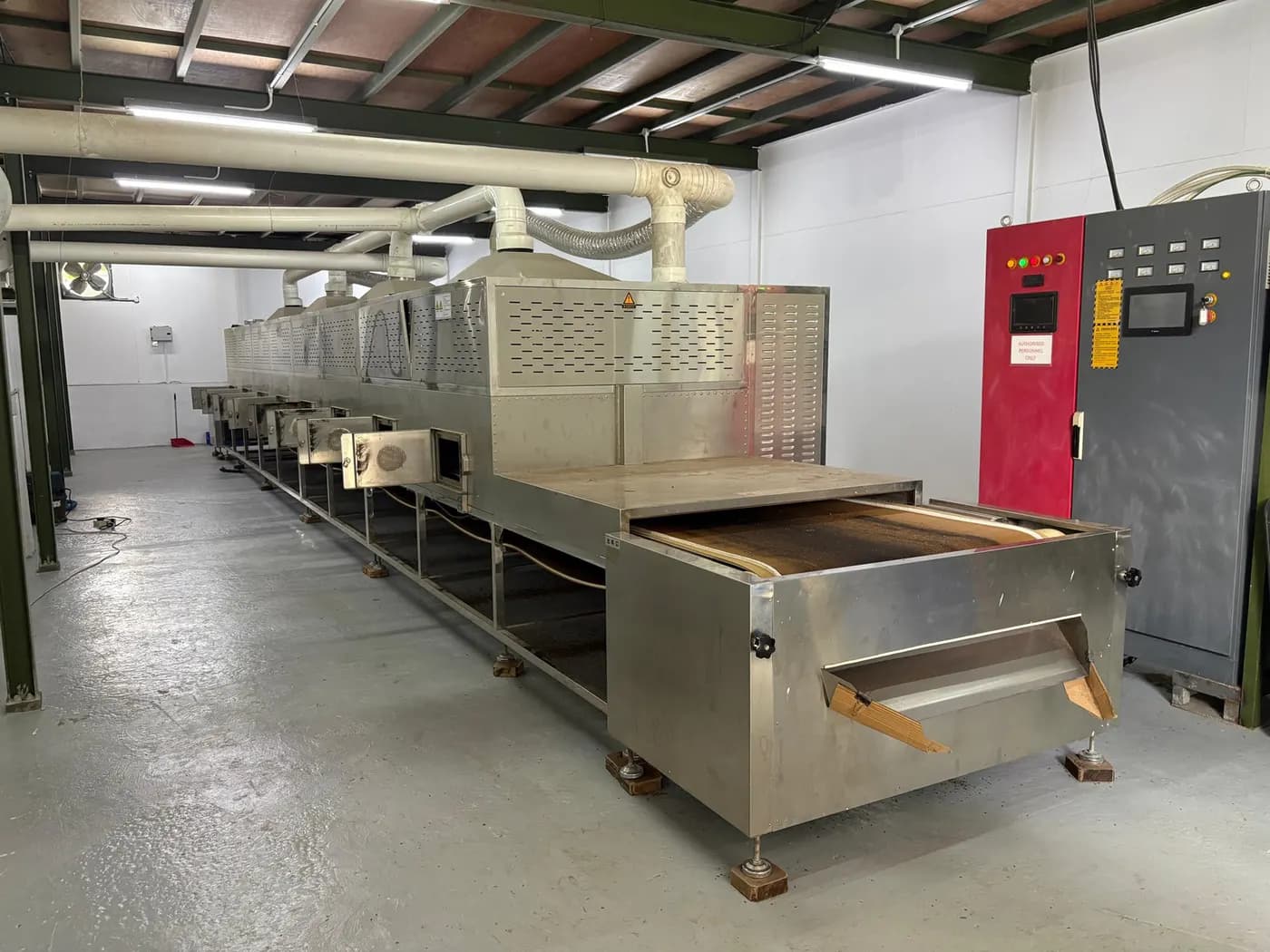
Dry, mill, pack
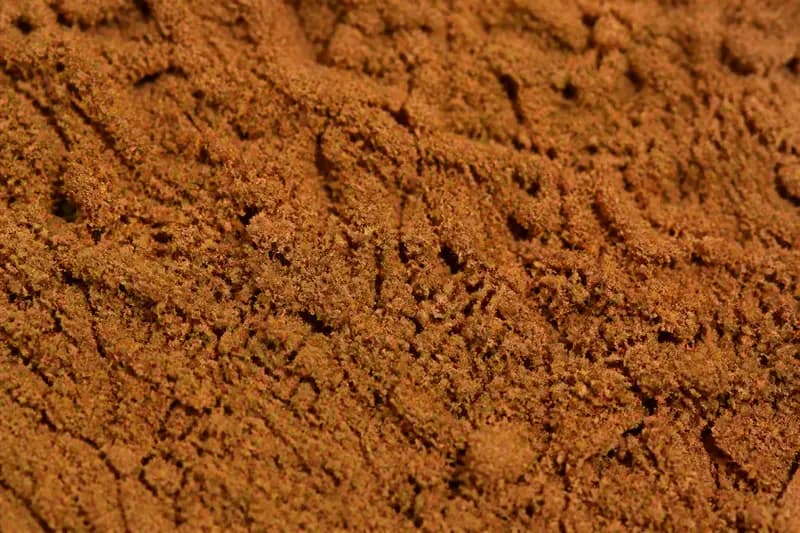
Larvae are dried, then bagged whole or pulverised into powder. Frass is matured, screened and bagged as plant food. Three products, one insect.
Out of the bin, into a loop.
Pulling organics out of the waste stream is the work. The insect is how that work gets done.
The wet fraction is the problem fraction
Food waste is heavy, it leaks, and it is what makes a bin room smell. Pull it out and everything else in the waste stream behaves better.
Buried organics turn into methane
Sealed under landfill, organic matter breaks down without oxygen and releases methane. Fed to larvae, the same material breaks down aerobically in a shed.
Both outputs are products
Larvae leave as feed, the residue leaves as frass fertiliser. Both sides of the split are sold as products.
One insect does the work
Black soldier fly larvae are the whole process. The adults have no working mouthparts, so they never bite and never feed.
Come and see where the waste goes.
Whether you have organic waste to hand over or you want the feed and fertiliser that come out, a WhatsApp note, a phone call or the website will reach us.
1st Floor, No. 47 Lot 3780
Liang Kee Commercial Centre
Jalan Penrissen
93250 Kuching
Sarawak, Malaysia